


- Anatomy
- Conditions
- Procedures
-
Total Knee Replacement
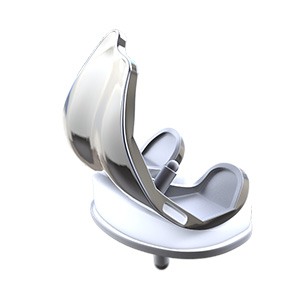
Total knee replacement, also called total knee arthroplasty, is a surgical procedure used to replace worn or damaged surfaces of the knee joint with artificial implants.
-
Unicompartmental (Partial) Knee Replacement
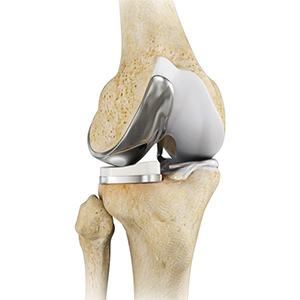
Unicompartmental knee replacement, also called partial knee replacement, is a minimally invasive surgical procedure in which only the damaged portion of the knee joint is replaced with an artificial implant.
-
Revision Knee Replacement
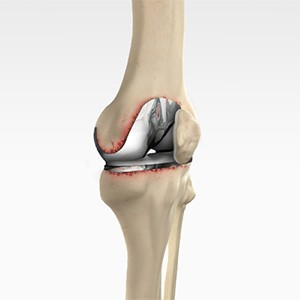
Revision knee replacement is a surgical procedure performed to replace part or all of a previously implanted knee prosthesis with a new artificial joint. While total knee replacement is highly successful, implants may eventually fail due to wear, loosening, infection, or other complications, requiring a second surgery.
-
Arthroscopy of the Knee Joint
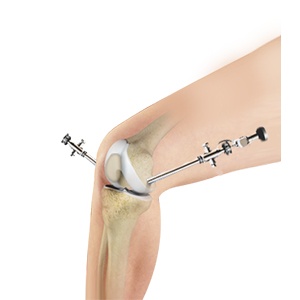
Knee arthroscopy is a minimally invasive surgical procedure used to diagnose and treat a wide range of knee joint problems. It is performed using an arthroscope, a small camera inserted into the knee through tiny incisions, allowing the surgeon to directly visualize and treat internal structures of the joint.
-
Meniscal Repair
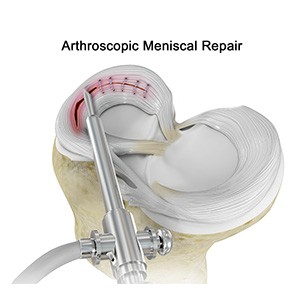
Meniscal transplantation is an advanced knee preservation procedure performed to replace a damaged or previously removed meniscus with healthy donor cartilage. The procedure is designed to help reduce pain, improve knee function, and potentially delay progressive cartilage damage and arthritis in appropriately selected patients.
-
Partial Meniscectomy
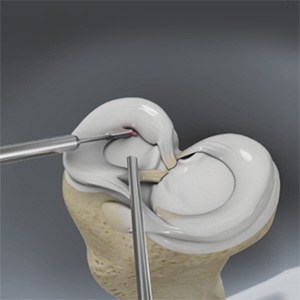
Partial meniscectomy is a minimally invasive arthroscopic procedure performed to remove the damaged portion of a torn meniscus while preserving as much healthy cartilage as possible. The goal of surgery is to relieve pain, improve knee function, and restore motion while maintaining knee stability and joint preservation.
-
Osteochondral Allograft
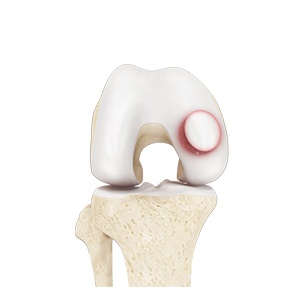
Osteochondral allograft transplantation is an advanced cartilage restoration procedure used to treat areas of damaged cartilage and underlying bone within the joint. The procedure involves transplanting healthy donor cartilage and bone tissue to replace damaged areas and restore joint surfaces.
-
Cartilage Restoration
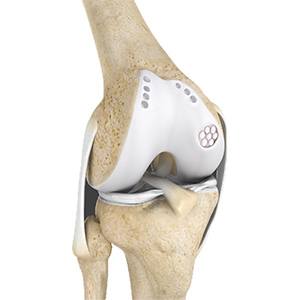
Cartilage restoration procedures are designed to treat damaged joint cartilage and help preserve joint function, reduce pain, and restore activity levels. Articular cartilage is the smooth tissue covering the ends of bones within a joint that allows bones to glide smoothly while absorbing impact during movement.
-
Patella Stabilization
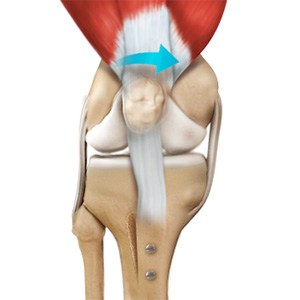
Patella stabilization procedures are performed to treat recurrent kneecap instability, subluxation, and dislocation. The goal of treatment is to restore knee stability, reduce pain, and help patients safely return to sports and daily activities.
-
Knee Osteotomy
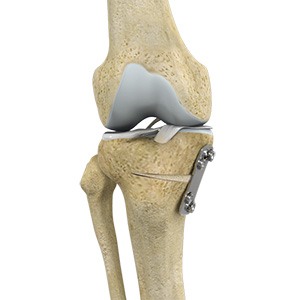
Knee osteotomy is a joint-preserving surgical procedure performed to correct knee alignment and relieve pressure on damaged cartilage in patients with early-stage, one-sided knee arthritis.
-
Posterior Cruciate Ligament (PCL) Reconstruction
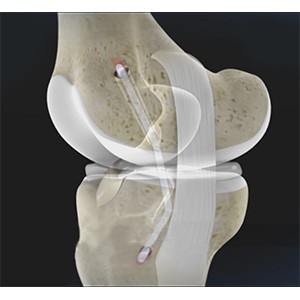
Posterior cruciate ligament (PCL) reconstruction is a surgical procedure performed to restore knee stability following significant injury to the posterior cruciate ligament. The PCL is one of the four major stabilizing ligaments of the knee and helps prevent the shinbone (tibia) from moving backward relative to the thighbone (femur).
-
Posterolateral Corner (PLC) Reconstruction
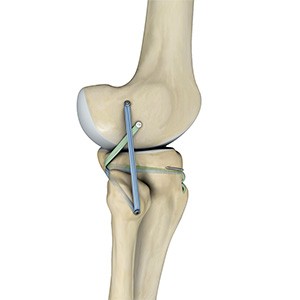
Posterolateral corner (PLC) reconstruction is a surgical procedure performed to restore stability to the outer and back portion of the knee following injury to the posterolateral stabilizing structures. The posterolateral corner plays an important role in controlling knee stability, rotational motion, and protecting the cruciate ligaments.
-
Medial Collateral Ligament (MCL) Repair & Reconstruction
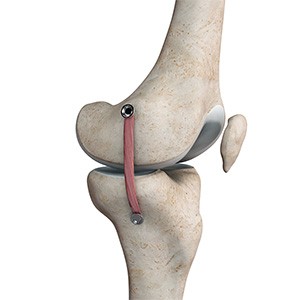
Medial collateral ligament (MCL) repair and reconstruction procedures are performed to restore stability to the inner side of the knee following significant ligament injury. The MCL is one of the four major stabilizing ligaments of the knee and connects the femur (thigh bone) to the tibia (shin bone).
-
Anterolateral Ligament (ALL) Reconstruction
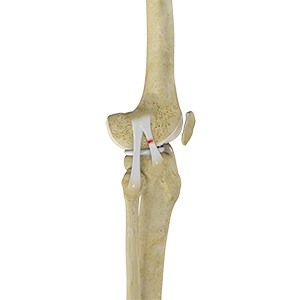
Anterolateral ligament (ALL) reconstruction is a knee stabilization procedure performed to improve rotational stability and reduce residual instability following ligament injury. The ALL is a band of tissue located along the outer side of the knee that extends from the femur (thigh bone) to the tibia (shin bone).
-
Medial Patellofemoral Ligament (MPFL) Reconstruction
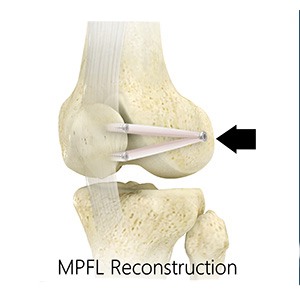
Medial patellofemoral ligament (MPFL) reconstruction is a surgical procedure used to restore stability to the kneecap after recurrent dislocation or chronic patellar instability.
-
Anterior Cruciate Ligament (ACL) Reconstruction
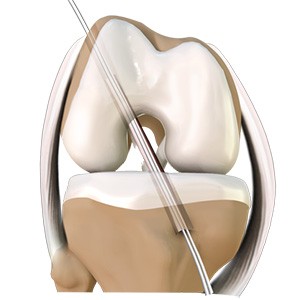
Anterior cruciate ligament (ACL) reconstruction is a surgical procedure used to restore stability to the knee after an ACL tear. The ACL is one of the primary stabilizing ligaments of the knee, located in the center of the joint, and connects the femur (thigh bone) to the tibia (shin bone).
-
ACL Reconstruction Using Hamstring Tendon
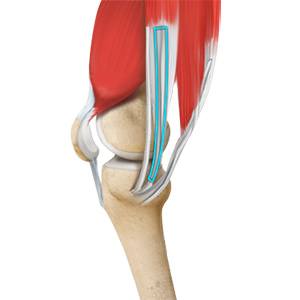
Anterior cruciate ligament (ACL) reconstruction using hamstring tendon is a surgical procedure that replaces a torn ACL with a graft taken from the patient’s hamstring tendons.
-
ACL Reconstruction Using Patellar Tendon
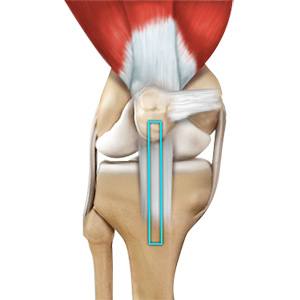
Anterior cruciate ligament (ACL) reconstruction using patellar tendon is a surgical procedure that replaces a torn ACL with a graft taken from the patient’s own patellar tendon.