
Knee Osteotomy Surgery in Lincoln & Omaha, NE
Knee osteotomy is a joint-preserving surgical procedure performed to correct knee alignment and relieve pressure on damaged cartilage in patients with early-stage, one-sided knee arthritis. The procedure involves cutting and realigning the upper shinbone (tibia) or lower thighbone (femur) to shift weight away from the worn portion of the knee and onto healthier cartilage.
This realignment helps reduce pain, improve function, and slow the progression of arthritis while preserving the natural knee joint.
In many cases of unicompartmental knee osteoarthritis, osteotomy may be recommended as an alternative to partial or total knee replacement, especially in younger or active patients with significant malalignment.
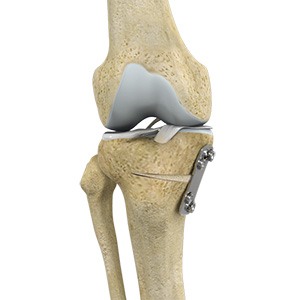
During the procedure, a precisely measured bone wedge is removed or added depending on the deformity. The bone is then secured with plates and screws to maintain the corrected alignment while healing occurs.
Matthew Byington, DO provides evaluation and treatment for complex knee conditions in Lincoln and Omaha, including joint preservation procedures such as knee osteotomy.
What Is Knee Osteotomy?
Knee osteotomy is a surgical procedure in which the tibia or femur is carefully cut and realigned to correct abnormal knee alignment. It is primarily used when arthritis is limited to one compartment of the knee.
By redistributing mechanical load across the joint, the procedure reduces stress on the damaged area and improves overall knee function.
A high tibial osteotomy is the most commonly performed type, especially for patients with bow-legged alignment and medial compartment arthritis.
Who Is a Candidate for Osteotomy?
Knee osteotomy may be recommended for patients with:
- Unicompartmental knee osteoarthritis
- Bow-legged (varus) or knock-knee (valgus) deformity
- Early to moderate arthritis
- Pain localized to one side of the knee
- Active lifestyle requiring joint preservation
- Desire to delay knee replacement
Causes of Knee Misalignment
Knee alignment problems may develop due to:
- Osteoarthritis progression
- Prior ligament injuries (ACL or MCL)
- Meniscus tears or removal
- Previous fractures or trauma
- Long-term uneven joint loading
- Natural biomechanical alignment differences
Over time, uneven loading leads to accelerated cartilage wear on one side of the knee.
Symptoms
Patients may experience:
- One-sided knee pain
- Pain with walking, standing, or activity
- Bow-legged or knock-knee appearance
- Swelling and stiffness
- Limping or altered gait
- Reduced activity tolerance
- Progressive worsening of symptoms
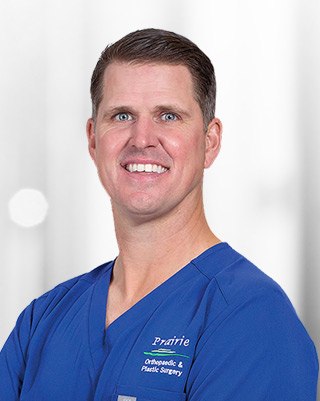
Matthew Byington, DO Board Certified Orthopaedic Surgeon
Dr. Matthew Byington is a board certified Orthopedic Surgeon, specializing in minimally invasive arthroscopic techniques and sports medicine. He specializes in Shoulder, Knee and Elbow conditions, although he treats all orthopedic conditions.
How Knee Osteotomy Is Performed
Knee osteotomy is performed under anesthesia and typically includes the following steps:
- Preoperative imaging (X-ray or CT scan) for surgical planning
- Precise measurement of correction angle
- Small incision near the knee joint
- Controlled cut in the tibia or femur
- Removal or addition of a bone wedge to correct alignment
- Realignment of the leg to shift load away from damaged cartilage
- Fixation with plates and screws
- Layered closure of the incision
The bone gradually heals in the corrected position over time.
Recovery After Osteotomy
Recovery varies depending on the type and extent of correction but typically includes:
- Crutches with partial or non-weight-bearing initially
- Knee brace for protection and stability
- Pain and swelling management
- Physical therapy to restore motion and strength
- Gradual progression to full weight-bearing
- Gait training and strengthening exercises
- Full recovery in approximately 3–6 months (may vary)
Follow-up imaging is used to confirm proper bone healing.
Benefits of Knee Osteotomy
Potential benefits include:
- Reduced knee pain
- Improved alignment and biomechanics
- Preservation of the natural knee joint
- Delayed or avoided knee replacement
- Improved mobility and activity tolerance
- Return to active lifestyle
- Long-term joint preservation
Risks & Complications
As with any surgical procedure, potential risks include:
- Infection
- Blood clots (deep vein thrombosis)
- Delayed bone healing or non-union
- Over- or under-correction of alignment
- Nerve or blood vessel injury
- Knee stiffness
- Hardware irritation (plates or screws)
- Persistent symptoms or need for further surgery
Why Choose Matthew Byington, DO
Matthew Byington, DO specializes in advanced knee preservation and complex alignment correction procedures. His treatment approach focuses on restoring function while preserving the natural joint whenever possible.
Care is tailored to each patient’s anatomy, activity level, and long-term goals, with an emphasis on:
- Joint preservation whenever appropriate
- Precise correction of knee alignment
- Reduction of pain without early joint replacement
- Support for active lifestyles and return to activity
- Individualized surgical planning and rehabilitation
Frequently Asked Questions
What does knee osteotomy do?
It realigns the knee to shift pressure away from damaged cartilage and improve function.
Who is a good candidate?
Typically younger, active patients with arthritis limited to one side of the knee.
How long does recovery take?
Most patients recover in 3–6 months depending on healing and rehabilitation.
Will I still have my natural knee?
Yes. The procedure preserves your native knee joint.
Can it delay knee replacement?
Yes, in many cases it significantly delays or avoids the need for joint replacement.
Restore Knee Alignment & Protect Your Joint
If knee pain, arthritis, or misalignment is affecting your daily activities, knee osteotomy may help preserve your natural joint and restore function.
Schedule a consultation with Matthew Byington, DO to discuss whether knee osteotomy is right for you and explore personalized treatment options.