

Ligament Preservation & Repair Surgery in Lincoln & Omaha, NE
Ligament preservation and repair is an advanced orthopaedic approach focused on restoring the body’s natural ligament structure rather than replacing it with graft tissue. When appropriate, this technique aims to repair and reinforce injured ligaments, maintaining native anatomy, blood supply, and proprioception for optimal joint function.
Ligament preservation is commonly considered in acute injuries where the ligament tissue remains viable and suitable for repair.
Matthew Byington, DO provides specialized evaluation and treatment for ligament injuries in Lincoln and Omaha, Nebraska, offering both repair and reconstruction options based on individual patient needs.
What is Ligament Preservation/Repair?
Ligament repair involves reattaching or reinforcing a torn ligament using sutures, anchors, or augmentation techniques. Unlike reconstruction, which replaces the ligament with a graft, preservation focuses on maintaining the patient’s native tissue whenever possible.
Common ligaments treated with repair techniques include:
- Anterior cruciate ligament (ACL) (select cases)
- Posterior cruciate ligament (PCL)
- Medial collateral ligament (MCL)
- Lateral collateral ligament (LCL)
- Multi-ligament knee injuries
When is Ligament Repair Recommended?
Ligament preservation may be recommended in:
- Acute ligament injuries (early presentation)
- Proximal or distal ligament tears (near bone attachment)
- Good tissue quality
- Younger or active patients
- Select sports injuries
- Multi-ligament knee injuries where repair is feasible
Not all ligament injuries are suitable for repair. Chronic injuries or severely damaged ligaments may require reconstruction instead.
What are the Benefits of Ligament Preservation?
Potential advantages of ligament repair include:
- Preservation of native ligament tissue
- Maintenance of natural biomechanics
- Improved proprioception (joint awareness)
- Smaller surgical footprint
- Faster recovery in select cases
- Avoidance of graft harvesting
- Potential for more natural joint function
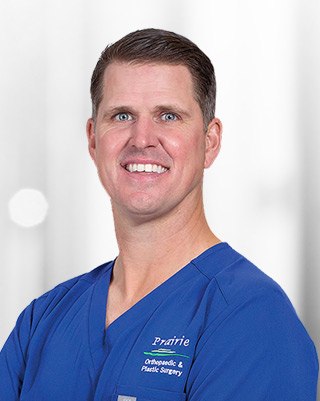
Matthew Byington, DO Board Certified Orthopaedic Surgeon
Dr. Matthew Byington is a board certified Orthopedic Surgeon, specializing in minimally invasive arthroscopic techniques and sports medicine. He specializes in Shoulder, Knee and Elbow conditions, although he treats all orthopedic conditions.
How is Ligament Repair Performed?
Ligament repair is typically performed using minimally invasive or small-incision techniques under anesthesia.
During the procedure:
- The injured ligament is carefully evaluated
- Torn ends are identified and prepared
- Sutures or anchors are used to reattach the ligament to bone
- Augmentation (internal bracing) may be added for reinforcement
- Stability is assessed before completing the procedure
In some cases, ligament repair may be combined with:
- Arthroscopic surgery
- Multi-ligament procedures
- Cartilage or meniscus treatment
The goal is to restore stability while preserving the natural ligament structure.
Recovery After Ligament Repair
Recovery timelines vary depending on the ligament involved and injury severity.
Postoperative care may include:
- Knee or joint bracing
- Protected weight-bearing
- Gradual range-of-motion exercises
- Physical therapy
- Strengthening and neuromuscular training
- Progressive return to activity
Some patients may experience faster recovery compared to reconstruction, although rehabilitation remains essential.
Risks & Complications
As with any surgical procedure, risks may include:
- Infection
- Blood clots
- Stiffness
- Persistent instability
- Repair failure
- Reinjury
- Nerve or blood vessel injury
Appropriate patient selection is critical to optimize outcomes with ligament repair.
Why Choose Dr. Byington for Ligament Preservation/Repair?
Matthew Byington, DO is a fellowship-trained orthopaedic surgeon specializing in sports medicine and complex knee ligament procedures. He offers advanced techniques in both ligament repair and reconstruction, tailoring treatment based on:
- Injury type and severity
- Tissue quality
- Patient activity level
- Long-term functional goals
His approach emphasizes restoring joint stability, preserving natural anatomy, and helping patients safely return to active lifestyles.
Frequently Asked Questions About Ligament Repair
What is the difference between ligament repair and reconstruction?
Repair preserves and reattaches the native ligament, while reconstruction replaces it with graft tissue.
Can all ligament injuries be repaired?
No. Repair is typically suitable for select acute injuries with good tissue quality. Chronic or severe injuries often require reconstruction.
Is ligament repair better than reconstruction?
In appropriate cases, repair may offer advantages such as faster recovery and preservation of natural function. However, the best option depends on the specific injury.
Will I need physical therapy after surgery?
Yes. Rehabilitation is essential to restore strength, mobility, and joint stability.
Can athletes return to sports after ligament repair?
Many athletes return to sports following proper healing and rehabilitation, depending on the injury and procedure performed.
Restore Stability While Preserving Natural Function
If you have a ligament injury and want to explore advanced preservation-focused treatment options, schedule an evaluation with Matthew Byington, DO to discuss personalized ligament repair solutions in Lincoln and Omaha, Nebraska.