


MCL Repair & Reconstruction Surgery in Lincoln & Omaha, NE
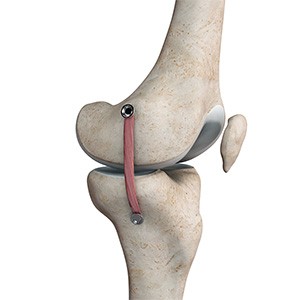
Medial collateral ligament (MCL) repair and reconstruction procedures are performed to restore stability to the inner side of the knee following significant ligament injury. The MCL is one of the four major stabilizing ligaments of the knee and connects the femur (thigh bone) to the tibia (shin bone).
The MCL helps prevent excessive inward movement of the knee and plays an important role in maintaining stability during walking, running, cutting, and athletic activity.
Matthew Byington, DO provides evaluation and treatment for MCL injuries and complex knee ligament conditions in Lincoln and Omaha, including MCL repair and reconstruction procedures.
What Causes MCL Injuries?
MCL injuries commonly occur following direct force to the outer side of the knee.
Common causes include:
- Contact sports injuries
- Twisting injuries
- Sudden changes in direction
- Falls
- Direct impact to the knee
- Athletic trauma
MCL injuries may range from mild sprains to complete ligament tears.
Symptoms of an MCL Injury
Common symptoms may include:
- Pain along the inner side of the knee
- Swelling
- Tenderness
- Instability
- Difficulty walking
- Stiffness
- Feeling the knee giving way
- Reduced athletic performance
Symptoms vary depending on injury severity.
Types of MCL Injuries
Grade I Injury
The ligament is mildly stretched without significant instability.
Grade II Injury
The ligament is partially torn with increased laxity.
Grade III Injury
The ligament is completely torn, resulting in instability.
Higher-grade injuries may occur with additional ligament damage.
How Is an MCL Injury Diagnosed?
Evaluation commonly includes:
- Medical history review
- Physical examination
- Motion assessment
- Stability testing
- Activity evaluation
Valgus Stress Test
The valgus stress test helps evaluate MCL stability.
The knee is slightly flexed while pressure is applied to assess pain and laxity along the inner knee.
Imaging Studies
X-Rays may evaluate:
- Bone injury
- Alignment
- Associated fractures
MRI commonly evaluates:
Arthroscopy may occasionally assist in evaluating associated injuries.
Non-Surgical Treatment Options
Many MCL injuries heal successfully without surgery.
Conservative treatment may include:
- Ice therapy
- Activity modification
- Knee bracing
- Physical therapy
- Strengthening exercises
- Motion restoration programs
Treatment recommendations depend on overall knee stability.
When Is MCL Surgery Recommended?
Surgery may be considered for:
- Chronic instability
- Persistent symptoms despite rehabilitation
- Complete tears with instability
- Combined ligament injuries
- Failed conservative treatment
- Athletic instability affecting performance
MCL surgery is often considered when injuries occur together with ACL or PCL tears.

Matthew Byington, DO Board Certified Orthopaedic Surgeon
Dr. Matthew Byington is a board certified Orthopedic Surgeon, specializing in minimally invasive arthroscopic techniques and sports medicine. He specializes in Shoulder, Knee and Elbow conditions, although he treats all orthopedic conditions.
MCL Repair & Reconstruction Procedures
MCL Repair
Repair may be performed when the ligament can be restored directly depending on tear location and tissue quality.
MCL Reconstruction
Reconstruction uses graft tissue to restore ligament function.
During surgery:
- Damaged tissue is evaluated
- Graft tissue is prepared using donor or autograft tissue
- Bone tunnels are created within the femur and tibia
- The graft is positioned to recreate normal ligament anatomy
- Fixation devices secure the graft
Arthroscopy may also be performed to evaluate associated injuries.
Recovery After MCL Reconstruction
Recovery depends on injury severity and associated procedures.
Postoperative rehabilitation commonly includes:
- Knee bracing
- Protected weight-bearing
- Crutch-assisted ambulation
- Progressive motion exercises
- Physical therapy
- Strengthening programs
- Return-to-sport rehabilitation
Recovery timelines vary depending on healing and activity goals.
Benefits of MCL Repair & Reconstruction
Potential benefits may include:
- Improved knee stability
- Pain reduction
- Restoration of function
- Improved athletic performance
- Return to activity
- Protection against recurrent instability
Risks & Complications
Possible risks may include:
- Knee stiffness
- Residual instability
- Infection
- Blood clots
- Numbness
- Nerve or blood vessel injury
- Graft failure
- Graft loosening
- Reduced range of motion
Why Choose Dr. Byington for MCL Treatment?
Matthew Byington, DO is a fellowship-trained orthopedic surgeon specializing in sports medicine and complex knee ligament reconstruction. He treats patients with:
- MCL injuries
- ACL injuries
- PCL injuries
- Multi-ligament knee injuries
- Meniscus tears
- Sports-related knee conditions
Treatment plans focus on restoring knee stability, preserving function, and helping patients return to active lifestyles.
Frequently Asked Questions About MCL Repair & Reconstruction
Do all MCL tears require surgery?
No. Many MCL injuries improve with bracing, rehabilitation, and non-surgical treatment.
When is MCL reconstruction recommended?
Surgery may be considered for chronic instability, persistent symptoms, or combined ligament injuries.
Can MCL injuries occur with ACL tears?
Yes. MCL injuries commonly occur together with ACL and other ligament injuries.
Will I need physical therapy after surgery?
Yes. Rehabilitation is important for restoring strength, motion, and knee stability.
How long is recovery after MCL reconstruction?
Recovery depends on injury severity, associated procedures, and rehabilitation progress.
Can athletes return to sports after MCL surgery?
Many athletes return to sports following healing and completion of rehabilitation.
Restore Knee Stability & Return to Activity
If knee instability, ligament injury, or sports-related knee pain is affecting your activities, schedule an evaluation with Matthew Byington, DO to discuss personalized MCL repair and reconstruction treatment options in Lincoln and Omaha, Nebraska.