


Unicompartmental (Partial) Knee Replacement in Lincoln & Omaha, NE
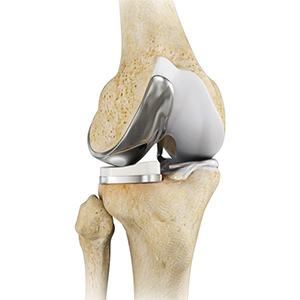
Unicompartmental knee replacement, also called partial knee replacement, is a minimally invasive surgical procedure in which only the damaged portion of the knee joint is replaced with an artificial implant. The knee is divided into three compartments: medial (inner knee), lateral (outer knee), and patellofemoral (front of the knee between the kneecap and thigh bone). When arthritis is limited to a single compartment, a partial knee replacement may be an effective alternative to total knee replacement. This procedure preserves healthy bone and tissue while relieving pain and improving function.
Matthew Byington, DO provides evaluation and treatment for knee arthritis in Lincoln and Omaha, including unicompartmental knee replacement procedures.
What Is Unicompartmental Knee Replacement?
Unicompartmental knee replacement involves replacing only the damaged compartment of the knee while preserving the healthy structures. Unlike total knee replacement, this procedure focuses on targeted treatment of arthritic damage, helping maintain more natural knee mechanics.
It is most commonly performed when osteoarthritis is isolated to one side of the knee.
Knee Arthritis Overview
Arthritis is inflammation of a joint that leads to pain, swelling, and stiffness. The most common form affecting the knee is osteoarthritis, a condition where cartilage gradually wears away.
As cartilage deteriorates:
- Bone surfaces begin to rub against each other
- Bone spurs may form around the joint
- Swelling and inflammation increase
- Movement becomes painful and restricted
Causes of Knee Arthritis
Common contributing factors include:
- Prior knee injuries or trauma
- Fractures involving the joint
- Excess body weight
- Repetitive stress or overuse
- Joint infections
- Inflammatory or connective tissue disorders
Symptoms of Knee Arthritis
Patients may experience:
- Knee pain that worsens with activity
- Stiffness, especially after rest
- Swelling and inflammation
- Reduced range of motion
- Difficulty walking, climbing stairs, or kneeling
- Knee deformity such as bow-legs or knock-knees
How Knee Arthritis Is Diagnosed
Diagnosis typically includes:
- Medical history and symptom review
- Physical examination of knee alignment and movement
- X-rays showing joint space narrowing
- Evaluation of severity and compartment involvement

Matthew Byington, DO Board Certified Orthopaedic Surgeon
Dr. Matthew Byington is a board certified Orthopedic Surgeon, specializing in minimally invasive arthroscopic techniques and sports medicine. He specializes in Shoulder, Knee and Elbow conditions, although he treats all orthopedic conditions.
When Is Partial Knee Replacement Recommended?
Unicompartmental knee replacement may be recommended for:
- Arthritis limited to one compartment of the knee
- Persistent knee pain despite non-surgical treatment
- Reduced mobility affecting daily activities
- Failure of medications, injections, or physical therapy
- Preserved ligaments and healthy surrounding joint structures
How Unicompartmental Knee Replacement Is Performed
Partial knee replacement is performed through a smaller incision compared to total knee replacement.
Surgical steps may include:
- Small incision over the affected side of the knee
- Removal of damaged cartilage and bone from the affected compartment
- Preparation of bone surfaces on the femur and tibia
- Placement of metal and plastic implant components
- Fixation of components using bone cement (in many cases)
- Assessment of knee movement and alignment
- Closure of soft tissues and incision
The goal is to replace only the damaged area while preserving healthy structures.
Recovery After Partial Knee Replacement
Recovery is typically faster than total knee replacement:
- Early walking with walker or cane
- Pain and swelling management
- Physical therapy for 4–6 months
- Gradual return to daily activities
- Low-impact activities such as walking, swimming, and cycling
- Avoidance of high-impact activities like running or jumping
Benefits of Unicompartmental Knee Replacement
- Smaller incision
- Less blood loss
- Faster recovery
- Less postoperative pain
- Improved range of motion
- More natural knee feel
- Preservation of healthy bone and ligaments
Risks & Complications
Possible risks include:
- Infection
- Blood clots (deep vein thrombosis)
- Knee stiffness
- Implant loosening
- Wear of plastic components
- Nerve or blood vessel injury
- Ligament injury
- Persistent pain or swelling
- Need for conversion to total knee replacement
Why Choose Matthew Byington, DO for Partial Knee Replacement
Matthew Byington, DO specializes in advanced knee reconstruction and joint preservation procedures, including partial and total knee replacement. His approach focuses on restoring function while preserving as much natural knee structure as possible.
Treatment is tailored based on arthritis severity, compartment involvement, and patient activity goals.
Frequently Asked Questions
What is a partial knee replacement?
It is a procedure that replaces only the damaged portion of the knee joint.
How is it different from total knee replacement?
Only one compartment is replaced, preserving healthy bone and tissue.
How long does recovery take?
Recovery is typically faster than total knee replacement.
Will I need physical therapy?
Yes, rehabilitation is essential for restoring strength and motion.
Can it be converted to total knee replacement later?
Yes, if arthritis progresses in other compartments.
Restore Knee Function & Relieve Arthritic Pain
If knee arthritis is limited to one area and pain is affecting your daily life, unicompartmental knee replacement may provide effective relief with a faster recovery.
Schedule a consultation with Matthew Byington, DO to discuss whether partial knee replacement is right for you.