


Medial Patellofemoral Ligament (MPFL) Reconstruction Surgery in Lincoln & Omaha, NE
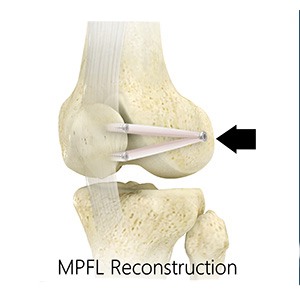
Medial patellofemoral ligament (MPFL) reconstruction is a surgical procedure used to restore stability to the kneecap after recurrent dislocation or chronic patellar instability. The MPFL helps keep the kneecap aligned within the femoral groove, and when injured, it can lead to repeated outward dislocations, pain, swelling, and difficulty with daily activities or sports. Reconstruction uses a tendon graft to recreate the ligament and restore normal kneecap tracking. Matthew Byington, DO provides evaluation and treatment for patellar instability in Lincoln and Omaha, including MPFL reconstruction procedures.
What Is the MPFL?
The medial patellofemoral ligament is a key stabilizing structure on the inner side of the knee. It connects the femur (thigh bone) to the patella (kneecap) and serves as the primary restraint against lateral (outward) dislocation of the kneecap.
It is especially important during early knee motion when the kneecap is most vulnerable to instability.
Causes of MPFL Injury
MPFL injuries most commonly occur due to:
- Traumatic lateral patellar dislocation
- Sports injuries involving twisting or pivoting
- Sudden changes in direction
- Direct impact to the knee
- Anatomical risk factors such as shallow trochlear groove
- Generalized ligament laxity
Once injured, the ligament may not heal adequately, leading to recurrent instability.
Symptoms
Patients with MPFL injury or patellar instability may experience:
- Recurrent kneecap dislocation or subluxation
- Pain around the kneecap
- Swelling after activity
- Feeling that the kneecap is slipping out
- Difficulty with stairs, squatting, or running
- Instability during sports or activity
- Tenderness along the inner knee
How MPFL Injuries Are Diagnosed
Diagnosis typically includes:
- Medical history of dislocation events
- Physical examination of patellar tracking
- Patellar apprehension test
- X-rays to assess alignment and rule out fractures
- MRI to evaluate MPFL injury and cartilage damage
MRI helps determine whether additional structural damage is present.
When Is MPFL Reconstruction Recommended?
MPFL reconstruction may be recommended for patients with:
- Recurrent patellar dislocations
- Chronic patellar instability
- Failed non-surgical treatment (bracing and therapy)
- Confirmed MPFL tear
- High-risk athletic participation with instability
- Cartilage injury from repeated dislocations

Matthew Byington, DO Board Certified Orthopaedic Surgeon
Dr. Matthew Byington is a board certified Orthopedic Surgeon, specializing in minimally invasive arthroscopic techniques and sports medicine. He specializes in Shoulder, Knee and Elbow conditions, although he treats all orthopedic conditions.
How MPFL Reconstruction Is Performed
MPFL reconstruction is performed under anesthesia using a tendon graft to restore stability. Surgical steps may include:
- Small incisions near the inner knee
- Preparation or harvesting of a tendon graft
- Creation of fixation points in the femur and patella
- Placement of the graft in the anatomic MPFL position
- Secure fixation using anchors or screws
- Adjustment of graft tension for proper kneecap tracking
- Closure of the incision in layers
The goal is to restore stable and natural kneecap movement.
Recovery After MPFL Reconstruction
Recovery is gradual and guided by physical therapy:
- Knee brace to protect the repair
- Controlled early range of motion
- Gradual weight-bearing progression
- Physical therapy for strength and stability
- Neuromuscular and balance training
- Return to daily activities over time
- Sport-specific rehabilitation before return to play
Recovery timelines vary depending on severity and activity goals.
Benefits of MPFL Reconstruction
Potential benefits include:
- Reduced risk of recurrent dislocation
- Improved kneecap stability
- Better knee function during activity
- Decreased pain and swelling episodes
- Improved confidence during movement
- Protection of cartilage from repeated injury
Risks & Complications
Possible risks include:
- Knee stiffness
- Persistent instability
- Over-tightening or maltracking of the patella
- Infection
- Blood clots (deep vein thrombosis)
- Nerve irritation or numbness
- Graft failure or loosening
- Ongoing pain or difficulty with kneeling
Why Choose Matthew Byington, DO
Matthew Byington, DO specializes in sports medicine and complex knee ligament reconstruction, with expertise in treating patellar instability and recurrent kneecap dislocations. His approach focuses on restoring stable kneecap tracking, preventing recurrence, and helping patients return safely to activity.
Care is tailored to each patient’s anatomy, activity level, and long-term goals.
Frequently Asked Questions
What does the MPFL do?
It stabilizes the kneecap and prevents it from dislocating outward.
Who needs MPFL reconstruction?
Patients with repeated kneecap dislocations or chronic instability.
Is surgery needed after one dislocation?
Usually not, unless there is significant structural damage or high risk of recurrence.
How long is recovery?
Most patients require several months of rehabilitation.
Can I return to sports?
Yes, after full recovery and completion of physical therapy.
Restore Kneecap Stability & Return to Activity
If recurrent kneecap dislocations are limiting your mobility or activity, MPFL reconstruction may help restore stability and protect long-term knee health.
Schedule a consultation with Matthew Byington, DO to discuss personalized treatment options.