

Knee Arthroscopy in Lincoln & Omaha, NE
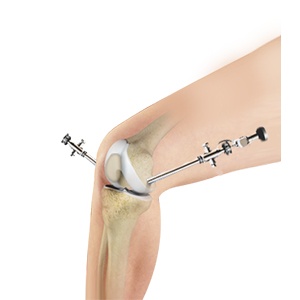
Knee arthroscopy is a minimally invasive surgical procedure used to diagnose and treat a wide range of knee joint problems. It is performed using an arthroscope, a small camera inserted into the knee through tiny incisions, allowing the surgeon to directly visualize and treat internal structures of the joint. Most patients are able to go home the same day as surgery due to its minimally invasive nature and faster recovery compared to open procedures.
Matthew Byington, DO provides evaluation and treatment for knee conditions in Lincoln and Omaha, including advanced arthroscopic procedures for diagnosis and repair of joint injuries.
Knee Anatomy
The knee is one of the largest and most complex joints in the body. It is formed by the femur (thigh bone), tibia (shin bone), and patella (kneecap). The fibula also connects near the knee joint.
The ends of these bones are covered with articular cartilage, a smooth, protective surface that allows pain-free movement. Between the femur and tibia are the menisci—two C-shaped cartilage structures that act as shock absorbers and help distribute load across the joint.
The knee is stabilized by ligaments (including the ACL, PCL, MCL, and LCL), tendons, muscles, and a joint capsule lined with synovial fluid that lubricates movement.
Conditions Treated with Knee Arthroscopy
Knee arthroscopy may be recommended for diagnosis or treatment of:
- Meniscus tears
- Ligament injuries (ACL or PCL tears)
- Damaged or loose cartilage
- Inflamed synovial tissue
- Patellar tracking problems or misalignment
- Baker’s cyst
- Loose bone or cartilage fragments
- Certain knee fractures
How Knee Arthroscopy Is Performed
Knee arthroscopy is performed under local, spinal, or general anesthesia depending on the patient and procedure complexity.
The procedure typically includes:
- Small incisions (portals) made around the knee
- Sterile saline injected to expand the joint space
- Insertion of an arthroscope with a camera for visualization
- Examination of internal knee structures on a monitor
- Use of specialized surgical instruments for repair or treatment
- Removal or repair of damaged tissue as needed
- Irrigation and removal of fluid from the joint
- Closure of incisions with sutures or steri-strips
Common arthroscopic treatments include:
- Meniscus repair or trimming
- ACL or PCL reconstruction
- Removal of loose cartilage or bone fragments
- Synovial tissue removal (synovectomy)
- Baker’s cyst removal
- Cartilage repair procedures (including microfracture)
- Patellar realignment procedures
Recovery After Knee Arthroscopy
Recovery depends on the type of procedure performed, but most patients return home the same day.
Postoperative care may include:
- Pain management with prescribed medications
- Use of crutches or knee brace if needed
- Ice and elevation to reduce swelling
- Physical therapy to restore motion and strength
- Gradual return to normal activity
- Sport-specific rehabilitation when appropriate
Simple procedures recover quickly, while ligament reconstruction or cartilage repair may require a longer rehabilitation period.
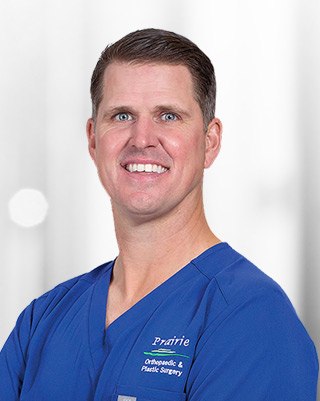
Matthew Byington, DO Board Certified Orthopaedic Surgeon
Dr. Matthew Byington is a board certified Orthopedic Surgeon, specializing in minimally invasive arthroscopic techniques and sports medicine. He specializes in Shoulder, Knee and Elbow conditions, although he treats all orthopedic conditions.
Benefits of Knee Arthroscopy
- Minimally invasive procedure
- Smaller incisions and less scarring
- Reduced postoperative pain
- Faster recovery compared to open surgery
- Accurate diagnosis of joint problems
- Effective treatment of multiple knee conditions
- Same-day discharge in most cases
Risks & Complications
Although knee arthroscopy is considered very safe, potential risks include:
- Infection
- Bleeding into the joint
- Knee stiffness
- Blood clots (deep vein thrombosis)
- Persistent pain or swelling
- Nerve or vessel irritation (rare)
- Ongoing or recurrent knee symptoms
Why Choose Matthew Byington, DO
Matthew Byington, DO specializes in sports medicine and minimally invasive knee surgery, including advanced arthroscopic procedures for diagnosis and treatment of complex knee conditions. His approach focuses on accurate diagnosis, tissue preservation, and restoring function with minimally invasive techniques whenever possible.
Care is tailored to each patient’s injury, activity level, and long-term goals.
Frequently Asked Questions
What is knee arthroscopy?
It is a minimally invasive surgery using a camera to diagnose and treat knee problems.
Is knee arthroscopy painful?
Most patients experience mild to moderate pain that improves within days.
How long is recovery?
Recovery varies from a few weeks for simple procedures to several months for complex repairs.
Will I need physical therapy?
Yes, rehabilitation is important for restoring strength and mobility.
Is it a same-day surgery?
Yes, most knee arthroscopy procedures are outpatient.
Restore Knee Function & Return to Activity
If knee pain, injury, or instability is affecting your movement, knee arthroscopy may provide both diagnosis and effective treatment.
Schedule a consultation with Matthew Byington, DO to explore personalized treatment options.