
Partial Meniscectomy Surgery in Lincoln & Omaha, NE
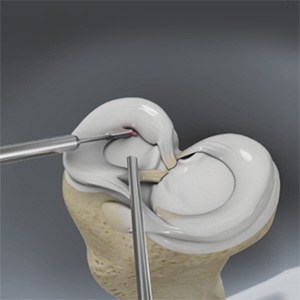
Partial meniscectomy is a minimally invasive arthroscopic procedure performed to remove the damaged portion of a torn meniscus while preserving as much healthy cartilage as possible. The goal of surgery is to relieve pain, improve knee function, and restore motion while maintaining knee stability and joint preservation.
The meniscus is a C-shaped cartilage structure within the knee that acts as a shock absorber between the femur and tibia. In addition to cushioning the joint, the meniscus helps distribute forces, improve stability, and protect cartilage surfaces.
Matthew Byington, DO provides evaluation and treatment for meniscus injuries in Lincoln and Omaha, including arthroscopic partial meniscectomy and knee preservation procedures.
What Is a Meniscus Tear?
Meniscus tears are among the most common knee injuries and frequently occur during sports, twisting movements, pivoting activities, or trauma.
Athletes participating in sports involving cutting and rotational movements may have an increased risk of injury, including:
- Football
- Basketball
- Tennis
- Soccer
- Wrestling
- Recreational athletics
Degenerative meniscus tears may also occur with age-related wear.
Symptoms of a Meniscus Tear
Common symptoms may include:
- Pain along the inside or outside of the knee
- Swelling
- Knee stiffness
- Locking or catching sensations
- Limited range of motion
- Difficulty straightening the knee
- Pain during twisting movements
- Reduced athletic performance
When Is Partial Meniscectomy Recommended?
Non-surgical treatment is often attempted first and may include:
- Rest and activity modification
- Physical therapy
- Anti-inflammatory medications
- Ice therapy
- Bracing or knee support
Surgery may be considered when:
- Symptoms persist despite conservative treatment
- Mechanical symptoms continue
- Locking or catching occurs
- Tear patterns are not repairable
- Knee function remains limited
Treatment recommendations depend on tear location, pattern, severity, and tissue quality.
Partial Meniscectomy vs. Total Meniscectomy
Partial Meniscectomy
Only the damaged portion of the meniscus is removed while preserving healthy tissue whenever possible.
Total Meniscectomy
The entire meniscus is removed.
Because preservation of meniscal tissue may help maintain knee cushioning and stability, partial meniscectomy is commonly preferred when appropriate.

Matthew Byington, DO Board Certified Orthopaedic Surgeon
Dr. Matthew Byington is a board certified Orthopedic Surgeon, specializing in minimally invasive arthroscopic techniques and sports medicine. He specializes in Shoulder, Knee and Elbow conditions, although he treats all orthopedic conditions.
How Is Partial Meniscectomy Performed?
Partial meniscectomy is usually performed using arthroscopic knee surgery, a minimally invasive procedure utilizing small incisions and specialized instruments.
During surgery:
- Small incisions are created around the knee
- An arthroscope (small camera) is inserted to visualize the joint
- Specialized instruments remove damaged meniscal tissue
- Unstable fragments causing locking or catching are removed
- Remaining meniscus edges are smoothed to preserve function
Associated cartilage or ligament conditions may also be evaluated during surgery.
Recovery After Partial Meniscectomy
Recovery is generally faster compared with more extensive procedures.
Postoperative rehabilitation commonly includes:
- Early motion exercises
- Physical therapy
- Strengthening programs
- Range of motion restoration
- Progressive activity advancement
- Return-to-sport rehabilitation
Recovery timelines vary depending on activity demands and associated conditions.
Benefits of Partial Meniscectomy
Potential benefits may include:
- Relief of mechanical symptoms
- Improved knee motion
- Reduced pain
- Preservation of healthy meniscus tissue
- Maintenance of knee stability
- Faster recovery compared with larger procedures
- Return to sports and activity
Risks & Complications
Possible risks associated with partial meniscectomy may include:
- Infection
- Bleeding
- Stiffness
- Persistent pain
- Injury to nerves or blood vessels
- Swelling
- Recurrent symptoms
- Progressive cartilage wear over time
Why Choose Dr. Byington for Partial Meniscectomy?
Matthew Byington, DO is a fellowship-trained orthopedic surgeon specializing in sports medicine and arthroscopic knee procedures. He treats patients with:
- Meniscus tears
- Sports-related knee injuries
- ACL injuries
- Cartilage damage
- Patellar instability
- Knee preservation conditions
Treatment plans focus on restoring function, preserving joint health, and helping patients return to active lifestyles.
Frequently Asked Questions About Partial Meniscectomy
What is a partial meniscectomy?
Partial meniscectomy is an arthroscopic procedure that removes only the damaged portion of the meniscus while preserving as much healthy cartilage as possible.
When is partial meniscectomy recommended?
The procedure may be recommended when symptoms persist despite conservative treatment or when the tear is not suitable for repair.
How is a partial meniscectomy performed?
The surgery is typically performed arthroscopically using small incisions, a camera, and specialized instruments to remove damaged tissue.
How long is recovery after partial meniscectomy?
Recovery varies by patient and activity level, but rehabilitation commonly includes physical therapy and progressive return to activity.
Will I need physical therapy after surgery?
Yes. Physical therapy often helps restore strength, motion, and knee function following surgery.
When can athletes return to sports after partial meniscectomy?
Return-to-sport timing depends on healing, rehabilitation progress, and the physical demands of the sport.
Partial Meniscectomy Serving Lincoln & Omaha, Nebraska
Dr. Byington provides partial meniscectomy evaluation and treatment for patients throughout Lincoln, Omaha, Bellevue, Papillion, Gretna, Seward, Waverly, Lancaster County, and surrounding communities.