


ACL Reconstruction Using Hamstring Tendon Surgery in Lincoln & Omaha, NE
Anterior cruciate ligament (ACL) reconstruction using hamstring tendon is a surgical procedure that replaces a torn ACL with a graft taken from the patient’s hamstring tendons. The ACL is one of the major stabilizing ligaments of the knee, connecting the femur (thigh bone) to the tibia (shin bone), and it plays a key role in preventing excessive forward movement and controlling rotational stability of the knee. When the ACL is torn, it does not heal on its own and often results in knee instability, weakness, and difficulty with movement. ACL reconstruction using hamstring tendon graft restores stability and function to the knee.
Matthew Byington, DO provides evaluation and treatment for ACL injuries in Lincoln and Omaha, including advanced ACL reconstruction using hamstring tendon graft techniques.
What Is ACL Reconstruction Using Hamstring Tendon?
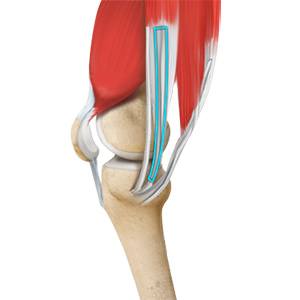
ACL reconstruction using hamstring tendon involves replacing the torn ligament with a graft harvested from the hamstring muscles located at the back of the thigh. The graft is used to recreate the ACL and restore normal knee stability and function.
This technique is commonly used for patients who require a strong, flexible graft option for return to activity.
Causes of ACL Injuries
ACL injuries commonly occur during:
- Sudden changes in direction
- Rapid deceleration while running
- Improper landing from a jump
- Direct blow to the knee (sports collision)
- Twisting with the foot planted
These movements place excessive stress on the ligament, resulting in tearing.
Symptoms of ACL Tear
Patients may experience:
- A loud “pop” at the time of injury
- Rapid swelling within hours
- Knee instability or “giving way”
- Pain and difficulty bearing weight
- Loss of confidence in knee movement
- Difficulty with pivoting or sports activities
How ACL Injuries Are Diagnosed
Diagnosis typically includes:
- Medical history and injury details
- Physical examination of knee stability
- Lachman test
- Pivot shift test
- X-rays to rule out fractures
- MRI to confirm ACL tear and assess associated injuries
When Is ACL Reconstruction Recommended?
ACL reconstruction using hamstring tendon may be recommended for:
- Complete ACL tears
- Knee instability affecting daily life or sports
- Athletes returning to pivoting activities
- Combined meniscus or cartilage injuries
- Failed non-surgical treatment
- Recurrent knee “giving way” episodes

Matthew Byington, DO Board Certified Orthopaedic Surgeon
Dr. Matthew Byington is a board certified Orthopedic Surgeon, specializing in minimally invasive arthroscopic techniques and sports medicine. He specializes in Shoulder, Knee and Elbow conditions, although he treats all orthopedic conditions.
How ACL Reconstruction (Hamstring Tendon) Is Performed
ACL reconstruction is performed under general anesthesia using minimally invasive arthroscopic techniques along with a small incision for graft harvesting.
Surgical steps may include:
- Arthroscopic examination of the knee joint
- Removal of the torn ACL tissue
- Harvesting of hamstring tendon graft through a small incision
- Preparation of bone tunnels in the femur and tibia
- Passage of the graft through the tunnels
- Fixation of the graft using screws or fixation devices
- Testing knee stability through range of motion
- Closure of incisions with sutures and sterile dressing
The graft gradually incorporates into bone to recreate a stable ACL.
Recovery After ACL Reconstruction
Recovery is structured and rehabilitation-based:
- Early physical therapy begins soon after surgery
- Use of crutches and/or knee brace if needed
- Pain and swelling control
- Gradual restoration of knee motion
- Strengthening of hamstrings and quadriceps
- Balance and neuromuscular training
- Progressive return to running and sports-specific activity
- Return to sports typically after several months of rehab
Adherence to rehabilitation is essential for successful recovery.
Benefits of Hamstring Tendon ACL Reconstruction
- Strong and versatile graft option
- Reduced donor site pain compared to other grafts
- Good knee stability restoration
- Improved return-to-sport potential
- Smaller incision for graft harvesting
- Balanced strength preservation in the knee
Risks & Complications
Possible risks include:
- Knee stiffness
- Graft failure or re-tear
- Infection
- Blood clots (deep vein thrombosis)
- Nerve irritation or numbness
- Hamstring weakness
- Persistent instability or pain
- Loss of motion
- Reinjury during recovery
Why Choose Matthew Byington, DO
Matthew Byington, DO specializes in sports medicine and advanced ACL reconstruction techniques, including hamstring tendon graft procedures. His approach focuses on restoring knee stability, optimizing graft selection, and helping patients return safely to active lifestyles.
Treatment plans are tailored based on injury severity, activity level, and long-term goals.
Frequently Asked Questions
Why use hamstring tendon for ACL reconstruction?
It provides a strong graft with less front-of-knee pain compared to other options.
How long is recovery?
Most patients require several months of rehabilitation before returning to sports.
Will my hamstring be weaker?
Some temporary weakness may occur, but strength typically returns with rehab.
Can I return to sports?
Yes, many patients return to sports after completing rehabilitation.
Is this a common ACL surgery?
Yes, it is one of the most commonly used ACL reconstruction techniques.
Restore Knee Stability & Return to Activity
If an ACL injury is affecting your mobility or athletic performance, ACL reconstruction using hamstring tendon graft may help restore stability and function.
Schedule a consultation with Matthew Byington, DO to discuss your personalized treatment plan.