

Reverse Total Shoulder Replacement Surgery in Lincoln & Omaha, NE
Reverse total shoulder replacement is an advanced surgical procedure designed for patients with severe shoulder arthritis combined with a massive rotator cuff tear, a condition known as rotator cuff tear arthropathy. In this condition, both the joint surfaces and the rotator cuff tendons are damaged, leading to pain, weakness, and loss of shoulder function. Unlike traditional shoulder replacement, reverse shoulder replacement changes the normal anatomy of the joint, allowing the deltoid muscle to power the shoulder instead of the torn rotator cuff. This helps restore arm elevation and improve function when other treatments are no longer effective.
Matthew Byington, DO provides evaluation and treatment for complex shoulder arthritis in Lincoln and Omaha, including reverse total shoulder replacement procedures.
What Is Reverse Total Shoulder Replacement?
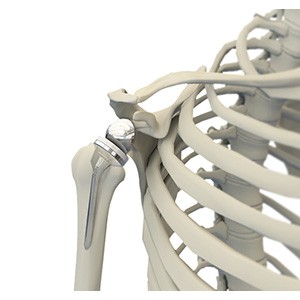
The shoulder is normally a ball-and-socket joint formed by the humeral head (ball) and the glenoid (socket). In reverse shoulder replacement, this structure is reversed: a metal ball is placed on the shoulder blade, and a plastic socket is placed on the upper arm bone.
This design allows the deltoid muscle to compensate for a non-functioning rotator cuff, restoring the ability to lift and move the arm.
What Is Rotator Cuff Tear Arthropathy?
Rotator cuff tear arthropathy occurs when a large, irreparable rotator cuff tear leads to progressive shoulder arthritis. Without a functioning rotator cuff:
- The shoulder becomes unstable
- Joint surfaces degenerate over time
- Pain and weakness worsen
- Arm elevation becomes difficult or impossible
Symptoms of Rotator Cuff Arthropathy
Patients may experience:
- Chronic shoulder pain (often worse at night)
- Severe weakness in the arm
- Inability to lift the arm above shoulder level
- Difficulty with overhead activities
- Prior history of rotator cuff tears or repairs
- Progressive loss of shoulder motion
When Is Reverse Shoulder Replacement Recommended?
Reverse total shoulder replacement may be recommended for:
- Irreparable rotator cuff tears
- Rotator cuff tear arthropathy
- Failed previous shoulder surgery or replacement
- Severe shoulder pain with loss of function
- Inability to perform overhead activities
- Failure of non-surgical treatments (therapy, injections, medications)
How Reverse Shoulder Replacement Is Performed
Reverse shoulder replacement is performed under general anesthesia and involves replacing damaged joint surfaces with artificial components.
Surgical steps may include:
- Incision over the shoulder to access the joint
- Separation of the humerus from the shoulder socket
- Removal of damaged bone and cartilage
- Preparation of the glenoid (socket) for implant placement
- Placement of a metal ball onto the shoulder blade
- Placement of a plastic socket on the upper arm bone
- Secure fixation of implants
- Repair and closure of surrounding soft tissues
- Closure of the incision with sutures
The new joint design allows the deltoid muscle to power shoulder movement.
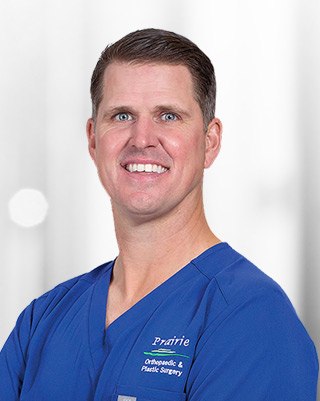
Matthew Byington, DO Board Certified Orthopaedic Surgeon
Dr. Matthew Byington is a board certified Orthopedic Surgeon, specializing in minimally invasive arthroscopic techniques and sports medicine. He specializes in Shoulder, Knee and Elbow conditions, although he treats all orthopedic conditions.
Recovery After Reverse Shoulder Replacement
Recovery is gradual and closely guided by rehabilitation:
- Hospital stay of 1–2 days in most cases
- Pain management with prescribed medications
- Sling immobilization for initial healing period
- Gentle range-of-motion exercises as directed
- Physical therapy to restore strength and mobility
- Avoidance of overhead lifting for at least 6 weeks
- Gradual return to daily activities over several months
Full recovery depends on healing and adherence to rehabilitation.
Benefits of Reverse Shoulder Replacement
- Improved shoulder function despite rotator cuff damage
- Reduced pain, especially at night
- Ability to lift the arm overhead
- Improved quality of life and independence
- Better function than traditional replacement in cuff-deficient shoulders
- Restored ability to perform daily activities
Risks & Complications
Possible risks include:
- Infection
- Shoulder dislocation or instability
- Fracture of the humerus or scapula
- Nerve or blood vessel injury
- Blood clots (deep vein thrombosis)
- Implant loosening or wear
- Arm length differences
- Wound irritation or delayed healing
Why Choose Matthew Byington, DO
Matthew Byington, DO specializes in complex shoulder reconstruction, including reverse total shoulder replacement for severe rotator cuff tear arthropathy. His approach focuses on restoring function, reducing pain, and improving independence in patients with advanced shoulder degeneration.
Each treatment plan is tailored to the patient’s condition, anatomy, and activity goals.
Frequently Asked Questions
Why is it called a “reverse” shoulder replacement?
Because the normal ball-and-socket structure is reversed to allow the deltoid muscle to move the arm.
Who needs this surgery?
Patients with severe arthritis and irreparable rotator cuff tears.
How long is recovery?
Recovery typically takes several months with structured rehabilitation.
Will I regain full strength?
Strength improves significantly, but may not return to normal pre-disease levels.
Is this better than traditional shoulder replacement?
Yes, in cases where the rotator cuff is severely damaged.
Restore Shoulder Function & Reduce Pain
If severe shoulder pain and loss of motion are affecting your ability to perform daily activities, reverse total shoulder replacement may help restore function and improve quality of life.
Schedule a consultation with Matthew Byington, DO to explore your treatment options.