

Ulnar Collateral Ligament (UCL) Injury & Reconstruction in Lincoln & Omaha, NE
Ulnar collateral ligament (UCL) injuries involve damage to the key stabilizing ligament on the inner side of the elbow. The UCL is especially important in overhead throwing and repetitive arm motions. Repeated stress from sports or occupational activity can cause microscopic tearing, inflammation, and eventually a complete rupture of the ligament. This condition is often associated with significant pain, weakness, and loss of throwing ability. In many cases, surgical reconstruction—commonly known as “Tommy John surgery”—may be required to restore stability and function.
Matthew Byington, DO provides evaluation and treatment for elbow ligament injuries in Lincoln and Omaha, including UCL reconstruction for athletes and active individuals.
What Is the UCL?
The ulnar collateral ligament is a strong band of tissue on the medial (inner) side of the elbow that connects the humerus (upper arm bone) to the ulna (forearm bone). It stabilizes the elbow during overhead motion, especially throwing, serving, or lifting.
Causes of UCL Injuries
UCL injuries are most commonly caused by repetitive stress, especially in overhead activities such as:
- Baseball pitching
- Tennis serving
- Javelin throwing
- Fencing
- Repetitive manual labor (painting, lifting)
- Gymnastics or throwing sports
Other causes may include:
- Acute trauma
- Elbow dislocation injuries
- Sudden overload or hyperextension
Symptoms of UCL Injury
Patients may experience:
- Pain on the inner side of the elbow
- A “popping” sensation during injury
- Difficulty or inability to throw
- Weak grip strength
- Pain with overhead activity
- Numbness or tingling in the ring and little fingers
- Pain radiating into the forearm or wrist
How UCL Injuries Are Diagnosed
Diagnosis typically includes:
- Medical history and activity review
- Physical examination and valgus stress testing
- X-rays to rule out bone injury
- MRI to evaluate ligament damage
Non-Surgical Treatment Options
Mild or partial UCL injuries may be treated without surgery using:
- Rest and activity modification
- Bracing or elbow splints
- Ice therapy
- Anti-inflammatory medications
- Steroid injections (select cases)
- Physical therapy and strengthening
- Ultrasound therapy for healing stimulation
- Throwing mechanics correction and coaching
Surgery is considered when conservative treatment fails or in high-demand athletes.
Matthew Byington, DO Board Certified Orthopaedic Surgeon
Dr. Matthew Byington is a board certified Orthopedic Surgeon, specializing in minimally invasive arthroscopic techniques and sports medicine. He specializes in Shoulder, Knee and Elbow conditions, although he treats all orthopedic conditions.
When Is UCL Reconstruction Needed?
UCL reconstruction is typically recommended for:
- Complete ligament tears
- Persistent instability after rehab
- Athletes wanting to return to overhead sports
- Chronic UCL insufficiency
- Failed non-surgical treatment (6–12 months)
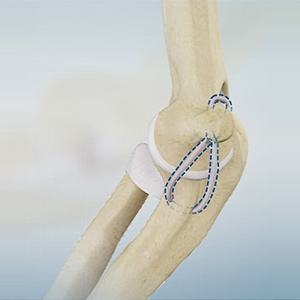
How UCL Reconstruction (Tommy John Surgery) Is Performed
UCL reconstruction replaces the torn ligament with a tendon graft (often palmaris longus or donor tissue).
Surgical steps may include:
- Incision over the medial elbow
- Protection and retraction of nerves and muscles
- Harvesting of tendon graft (forearm or lower leg)
- Drilling tunnels in the humerus and ulna
- Passing the graft in a figure-8 configuration
- Securing graft with sutures or fixation devices
- Closure of incision and application of splint with elbow at 90°
Recovery After UCL Reconstruction
Recovery is structured and gradual:
- Initial immobilization in a splint
- Early protected motion phase
- Progressive physical therapy
- Strengthening and range of motion training
- Sport-specific throwing program
- Full return to sport typically takes 9–12+ months
Rehabilitation is critical for long-term success.
Benefits of UCL Reconstruction
- Restores elbow stability
- Reduces pain during throwing
- Enables return to sports and activity
- High success rate in athletes
- Improved long-term joint function
Risks & Complications
Possible risks include:
- Infection
- Nerve irritation or injury (ulnar nerve)
- Elbow stiffness
- Graft failure or re-tear
- Persistent pain or weakness
- Loss of motion
- Blood clots (rare)
- Need for revision surgery
Why Choose Matthew Byington, DO
Matthew Byington, DO specializes in treating complex elbow ligament injuries, including UCL tears in both athletes and active individuals. His approach focuses on accurate diagnosis, advanced surgical reconstruction techniques, and structured rehabilitation programs designed to maximize return to sport and function.
Each treatment plan is tailored to the patient’s goals, activity level, and injury severity.
Frequently Asked Questions
Is UCL injury the same as “Tommy John surgery”?
Tommy John surgery is the common name for UCL reconstruction.
Can a UCL tear heal without surgery?
Partial tears may heal with non-surgical treatment, but complete tears often require surgery.
How long is recovery after surgery?
Return to sport typically takes 9–12 months or longer.
Will I regain full strength?
Many patients regain excellent function with proper rehab.
Is UCL surgery only for athletes?
No, it can also help non-athletes with chronic instability or pain.
Restore Elbow Strength & Return to Activity
If inner elbow pain or instability is limiting your ability to throw, work, or perform daily activities, UCL reconstruction may help restore function and stability.
Schedule a consultation with Matthew Byington, DO to discuss your treatment options.