

Elbow Joint Replacement Surgery in Lincoln & Omaha, NE
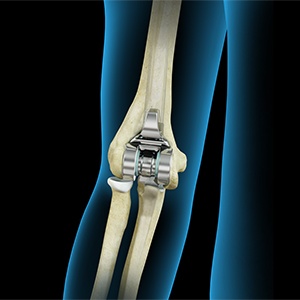
Elbow joint replacement, also called total elbow arthroplasty, is a surgical procedure used to relieve severe elbow pain and restore motion when arthritis or joint damage no longer responds to non-surgical treatment. The procedure replaces damaged portions of the elbow joint with artificial components designed to improve function and reduce pain. Matthew Byington, DO provides evaluation and treatment for advanced elbow conditions, including elbow joint replacement procedures in Lincoln and Omaha, NE.
What is Elbow Joint Replacement?
Elbow joint replacement, also referred to as total elbow arthroplasty, is a procedure performed to replace damaged portions of the elbow joint with artificial components. The elbow is a hinge joint formed by three bones: the humerus (upper arm bone), radius, and ulna (forearm bones).
Healthy cartilage covers the ends of these bones and allows smooth, pain-free motion. When cartilage becomes damaged from arthritis, injury, or degeneration, the bones may rub together, leading to pain, stiffness, swelling, and reduced mobility.
Elbow replacement surgery is designed to relieve pain, restore function, and improve range of motion when conservative treatments no longer provide relief.
Conditions Treated with Elbow Joint Replacement
Elbow joint replacement may be recommended for conditions including:
- Severe osteoarthritis of the elbow
- Rheumatoid arthritis
- Post-traumatic arthritis
- Complex elbow fractures in older adults
- Elbow joint destruction following injury
- Failed prior elbow procedures
- Tumors affecting the elbow joint
- Chronic pain and stiffness limiting daily activities
Symptoms of Advanced Elbow Arthritis or Joint Damage
Patients who may benefit from elbow replacement often experience:
- Persistent elbow pain
- Stiffness and reduced range of motion
- Swelling around the elbow joint
- Difficulty lifting or carrying objects
- Weakness of the arm
- Grinding or catching sensations
- Pain with everyday activities
- Symptoms that persist despite medications, injections, or therapy
Diagnosis
Evaluation begins with a thorough review of symptoms, medical history, and elbow function.
Diagnostic evaluation may include:
- Physical examination
- X-rays to assess arthritis and bone changes
- MRI or CT imaging when indicated
- Evaluation of prior injuries or surgeries
These studies help determine the extent of joint damage and whether elbow replacement is appropriate.
Non-Surgical Treatment Options
Conservative treatment is typically attempted before surgery and may include:
- Activity modification
- Anti-inflammatory medications
- Corticosteroid injections
- Bracing or splinting
- Physical or occupational therapy
- Ice and pain management strategies
When symptoms continue despite these treatments, surgery may be considered.
Matthew Byington, DO Board Certified Orthopaedic Surgeon
Dr. Matthew Byington is a board certified Orthopedic Surgeon, specializing in minimally invasive arthroscopic techniques and sports medicine. He specializes in Shoulder, Knee and Elbow conditions, although he treats all orthopedic conditions.
Elbow Joint Replacement Procedure
Elbow replacement surgery is performed under general or regional anesthesia.
The procedure generally involves:
- An incision is made along the back of the elbow.
- Muscles, tendons, and soft tissues are carefully moved aside to expose the joint.
- The ulnar nerve is protected throughout the procedure.
- Damaged joint surfaces of the humerus and ulna are removed.
- Bone canals are prepared for placement of prosthetic components.
- Artificial humeral and ulnar implants are inserted with or without bone cement.
- The components are connected to recreate the elbow hinge mechanism.
- Motion and stability are tested.
- The incision is closed and the elbow is dressed and protected.
The goal of surgery is to reduce pain while restoring motion and function.
Recovery After Elbow Joint Replacement
Recovery begins shortly after surgery and focuses on protecting the joint while restoring mobility.
Post-operative care may include:
- Hospital stay of approximately 4–5 days
- Pain management medications
- Use of a sling or splint
- Elevation and icing to reduce swelling
- Occupational therapy exercises
- Gradual restoration of elbow motion
- Activity restrictions during healing
Rehabilitation commonly continues for several months.
Risks & Complications
As with any major surgery, potential risks may include:
- Infection
- Blood clots (deep vein thrombosis)
- Implant loosening
- Elbow instability or dislocation
- Fracture around the implant
- Nerve or blood vessel injury
- Persistent pain or stiffness
- Wear of prosthetic components
Your surgeon will discuss risks and expected outcomes before surgery.
Why Choose Matthew Byington, DO for Elbow Joint Replacement?
Matthew Byington, DO provides comprehensive evaluation and treatment for advanced elbow conditions including arthritis, post-traumatic joint damage, and complex reconstruction procedures. Treatment plans are individualized based on each patient’s symptoms, goals, and functional needs with a focus on restoring mobility, relieving pain, and improving quality of life.
Frequently Asked Questions
How long does elbow replacement surgery take?
The procedure typically takes about 1–2 hours, depending on the complexity of the surgery.
How long is recovery after elbow replacement?
Recovery varies, but rehabilitation and strengthening generally continue for several months.
Will I need therapy after surgery?
Yes. Occupational therapy and rehabilitation exercises are important parts of recovery.
Will I have activity restrictions after surgery?
Heavy lifting and repetitive high-impact activities are typically limited to help protect the implant.
What conditions may require elbow replacement?
Severe arthritis, complex fractures, post-traumatic damage, and failed prior procedures may require elbow replacement.
Persistent elbow pain and stiffness can affect everyday activities and quality of life. Matthew Byington, DO provides evaluation and treatment for advanced elbow conditions, including elbow joint replacement procedures for patients in Lincoln and Omaha, NE.