

Cubital Tunnel Syndrome Treatment in Lincoln & Omaha, NE
Cubital tunnel syndrome is a common nerve condition that occurs when the ulnar nerve becomes compressed or irritated at the elbow. This compression may cause numbness, tingling, weakness, and pain that extends into the forearm, hand, and fingers.
Many patients first notice symptoms while sleeping, talking on the phone, driving, or keeping the elbow bent for long periods.
If left untreated, cubital tunnel syndrome may progress and lead to hand weakness, grip problems, and muscle loss.
Matthew Byington, DO provides comprehensive diagnosis and treatment for cubital tunnel syndrome in Lincoln and Omaha, offering personalized non-surgical and surgical treatment options designed to relieve nerve compression and restore upper extremity function.
Treatment recommendations depend on symptom severity, nerve involvement, and functional limitations.
What Is Cubital Tunnel Syndrome?
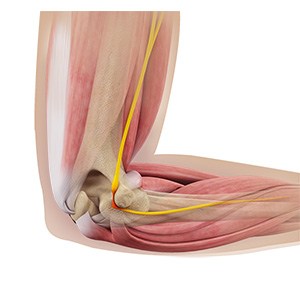
Cubital tunnel syndrome occurs when the ulnar nerve becomes compressed as it travels through the cubital tunnel on the inside portion of the elbow.
The ulnar nerve controls sensation in the:
- Ring finger
- Small finger
- Part of the hand
It also helps control several hand and finger muscles involved in grip and fine movement.
Because the nerve passes close to the skin near the “funny bone,” irritation or compression in this area may produce symptoms extending into the hand.
Cubital tunnel syndrome is considered the second most common nerve compression condition in the upper extremity after carpal tunnel syndrome.
Symptoms of Cubital Tunnel Syndrome
Symptoms often begin gradually and may worsen over time.
Common symptoms include:
- Numbness in the ring and small fingers
- Tingling in the hand
- Elbow pain or aching
- Weak grip strength
- Hand weakness
- Symptoms that worsen with elbow bending
- Nighttime numbness
- Difficulty with fine motor tasks
- Hand clumsiness
- Muscle wasting in advanced cases
What Does Cubital Tunnel Syndrome Feel Like?
Many patients describe cubital tunnel syndrome as tingling, numbness, or “pins and needles” extending from the elbow into the ring and little fingers, often accompanied by hand weakness.
What Causes Cubital Tunnel Syndrome?
Cubital tunnel syndrome develops when the ulnar nerve experiences prolonged pressure or irritation.
Common causes include:
- Repetitive elbow bending
- Leaning on the elbows
- Prolonged phone use
- Sleeping with elbows bent
- Prior elbow injuries
- Elbow arthritis
- Bone spurs
- Nerve instability or subluxation
- Repetitive work activities
Some patients develop symptoms without a clear cause.
Risk Factors for Cubital Tunnel Syndrome
Several factors may increase risk:
- Repetitive arm movements
- Desk or computer work
- Manual labor occupations
- Prior fractures or trauma
- Throwing sports
- Elbow arthritis
- Diabetes
- Prolonged elbow flexion activities
How Is Cubital Tunnel Syndrome Diagnosed?
Proper diagnosis helps determine severity and treatment options.
Medical History and Physical Examination
Dr. Byington evaluates:
- Numbness location
- Grip strength
- Muscle function
- Sensory changes
- Nerve irritation signs
- Elbow motion
Examination may include testing for nerve instability and muscle weakness.
X-Rays
X-rays may evaluate:
- Arthritis
- Bone spurs
- Prior injury changes
- Alignment abnormalities
Nerve Conduction Studies (EMG / NCV)
Electrodiagnostic testing helps evaluate:
- Nerve compression severity
- Muscle involvement
- Nerve function changes
Ultrasound or MRI
Advanced imaging may be recommended in selected patients.
Non-Surgical Treatment for Cubital Tunnel Syndrome
Many patients improve with conservative treatment.
Activity Modification
Reducing prolonged elbow flexion and pressure may improve symptoms.
Night Splinting
Keeping the elbow straighter during sleep may reduce nerve irritation.
Elbow Padding
Protective padding may decrease pressure over the nerve.
Physical Therapy
Therapy may focus on:
- Nerve gliding exercises
- Motion improvement
- Ergonomic modifications
- Functional training
Anti-Inflammatory Medications
NSAIDs may help reduce inflammation and discomfort.
Workplace and Ergonomic Adjustments
Changes in workstation setup and repetitive activity patterns may help reduce symptoms.

Matthew Byington, DO Board Certified Orthopaedic Surgeon
Dr. Matthew Byington is a board certified Orthopedic Surgeon, specializing in minimally invasive arthroscopic techniques and sports medicine. He specializes in Shoulder, Knee and Elbow conditions, although he treats all orthopedic conditions.
When Is Surgery Needed for Cubital Tunnel Syndrome?
Surgery may be considered when:
- Symptoms persist despite treatment
- Hand weakness develops
- Muscle loss occurs
- Nerve studies show significant compression
- Function continues to decline
- Numbness becomes persistent
Early treatment may help prevent permanent nerve damage.
Surgical Treatment Options for Cubital Tunnel Syndrome
Cubital Tunnel Release
This procedure relieves pressure on the ulnar nerve by releasing the surrounding tissues.
Ulnar Nerve Transposition
The nerve may be repositioned to reduce irritation and improve movement.
Medial Epicondylectomy
Selected patients may benefit from procedures addressing structural compression.
Treatment selection depends on anatomy, nerve stability, and symptom severity.
Recovery After Cubital Tunnel Surgery
Recovery varies depending on procedure type and severity.
Rehabilitation commonly focuses on:
- Nerve recovery
- Motion restoration
- Strength progression
- Grip improvement
- Functional activity return
Some nerve symptoms may improve gradually as recovery progresses.
Why Choose Dr. Byington for Cubital Tunnel Syndrome Treatment?
Matthew Byington, DO is a fellowship-trained orthopedic surgeon specializing in sports medicine and upper extremity conditions.
He treats:
- Cubital tunnel syndrome
- Nerve compression disorders
- Elbow pain
- Tendon injuries
- Sports injuries
- Hand and upper extremity conditions
- Joint preservation disorders
Treatment plans are individualized to relieve symptoms and restore function.
Cubital Tunnel Syndrome Treatment Serving Lincoln & Omaha, Nebraska
Dr. Byington provides cubital tunnel syndrome evaluation and treatment for patients throughout:
Frequently Asked Questions About Cubital Tunnel Syndrome
Can cubital tunnel syndrome go away without surgery?
Many patients improve with splinting, activity modification, ergonomic changes, and therapy.
What fingers are affected by cubital tunnel syndrome?
Symptoms commonly affect the ring finger and little finger.
Is cubital tunnel syndrome the same as carpal tunnel syndrome?
No. Cubital tunnel syndrome involves the ulnar nerve at the elbow, while carpal tunnel syndrome affects the median nerve at the wrist.
What causes numbness in the ring and little fingers?
Cubital tunnel syndrome is a common cause, although other nerve conditions may also contribute.
When should surgery be considered?
Surgery may be recommended when weakness, muscle loss, or persistent symptoms occur.
Can untreated cubital tunnel syndrome become permanent?
Severe or prolonged nerve compression may increase the risk of lasting weakness or sensory changes.
Find Relief From Hand Numbness and Elbow Pain
If numbness, tingling, weakness, or elbow discomfort is affecting work, sleep, sports, or daily activities, schedule an evaluation with Dr. Byington to discuss personalized treatment options for cubital tunnel syndrome in Lincoln and Omaha, Nebraska.