

Biceps Tendon Repair Surgery in Lincoln & Omaha, NE
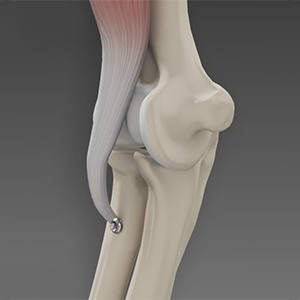
The biceps muscle plays an important role in bending the elbow, rotating the forearm, and stabilizing the shoulder. It is anchored by two tendons—one at the shoulder and one at the elbow (distal biceps tendon). When the distal biceps tendon tears, patients often lose strength and the ability to rotate the forearm from palm-down to palm-up. Unlike muscles, this tendon does not heal on its own once ruptured. Biceps tendon repair surgery is performed to reattach the tendon to the forearm bone and restore strength and function.
Matthew Byington, DO provides evaluation and surgical treatment for distal biceps tendon injuries in Lincoln and Omaha, helping patients regain arm strength and motion after tendon rupture.
What Is the Distal Biceps Tendon?
The distal biceps tendon connects the biceps muscle in the upper arm to the radius bone in the forearm. It is essential for:
- Forearm rotation (turning palm up and down)
- Elbow flexion (bending the arm)
- Maintaining upper limb strength and stability
When torn, it leads to significant weakness and loss of function.
Causes of Biceps Tendon Tears
Distal biceps tendon injuries are commonly caused by:
- Sudden lifting of heavy objects
- Forceful pulling or jerking motions
- Sports injuries
- Direct trauma to the elbow
- Degenerative tendon weakening over time
These injuries often occur in middle-aged men during lifting activities.
Symptoms of a Biceps Tendon Tear
Patients may experience:
- Sudden sharp pain in the front of the elbow
- A “pop” sensation at the time of injury
- Bruising and swelling in the forearm
- Visible bulge in the upper arm (“Popeye deformity”)
- Weakness in lifting and rotating the forearm
- Loss of strength during gripping activities
How Biceps Tendon Injuries Are Diagnosed
Diagnosis typically includes:
- Medical history and injury review
- Physical examination and strength testing
- Hook test for tendon integrity
- Ultrasound or MRI imaging
- Assessment of arm function and range of motion
When Is Biceps Tendon Repair Needed?
Surgery is usually recommended when:
- There is a complete distal biceps tendon rupture
- Significant loss of strength or function is present
- The patient requires full restoration of arm strength
- Conservative care is not effective (partial tears in select cases)
Early repair is preferred for optimal outcomes.

Matthew Byington, DO Board Certified Orthopaedic Surgeon
Dr. Matthew Byington is a board certified Orthopedic Surgeon, specializing in minimally invasive arthroscopic techniques and sports medicine. He specializes in Shoulder, Knee and Elbow conditions, although he treats all orthopedic conditions.
How Biceps Tendon Repair Is Performed
Biceps tendon repair reattaches the torn tendon to the radius bone using surgical anchors or fixation devices.
Surgical steps may include:
- Small incision over the front of the elbow or upper forearm
- Identification and mobilization of the torn tendon
- Preparation of the radius bone for tendon attachment
- Placement of suture anchors or fixation devices
- Secure reattachment of tendon to bone
- Closure of incision with sutures
The goal is to restore normal tendon tension and arm strength.
Recovery After Surgery
Recovery involves a structured rehabilitation process:
- Immobilization in a hinged elbow brace (typically at 90°)
- Gradual increase in motion under supervision
- Physical therapy for strength and flexibility
- Avoidance of heavy lifting for several weeks
- Full recovery of strength over 6–12 months
Rehabilitation is essential for optimal tendon healing.
Benefits of Biceps Tendon Repair
- Restoration of forearm rotation strength
- Improved lifting ability
- Return of elbow function
- Prevention of long-term weakness
- High success rate when treated early
Risks & Complications
Possible risks include:
- Nerve irritation or numbness
- Forearm weakness
- Limited range of motion
- Re-rupture of the tendon
- Formation of heterotopic bone (extra bone formation)
- Infection
- Stiffness or scar sensitivity
Why Choose Matthew Byington, DO
Matthew Byington, DO specializes in upper extremity tendon repair and reconstruction, including distal biceps tendon injuries. His approach emphasizes timely surgical intervention, precise anatomical repair, and structured rehabilitation to restore full strength and function.
Each treatment plan is tailored to the patient’s activity level and functional goals.
Frequently Asked Questions
Can a biceps tendon tear heal without surgery?
Complete distal tears do not heal on their own and usually require surgery.
How long is recovery?
Full recovery may take 6–12 months.
Will I regain full strength?
Most patients regain near-normal strength with proper rehab.
Is surgery urgent?
Early repair is recommended for best outcomes.
Will I need physical therapy?
Yes, it is essential for restoring motion and strength.
Restore Arm Strength & Function
If a biceps tendon injury is limiting your ability to lift, rotate, or use your arm normally, surgical repair may help restore strength and function.
Schedule a consultation with Matthew Byington, DO to discuss your treatment options.